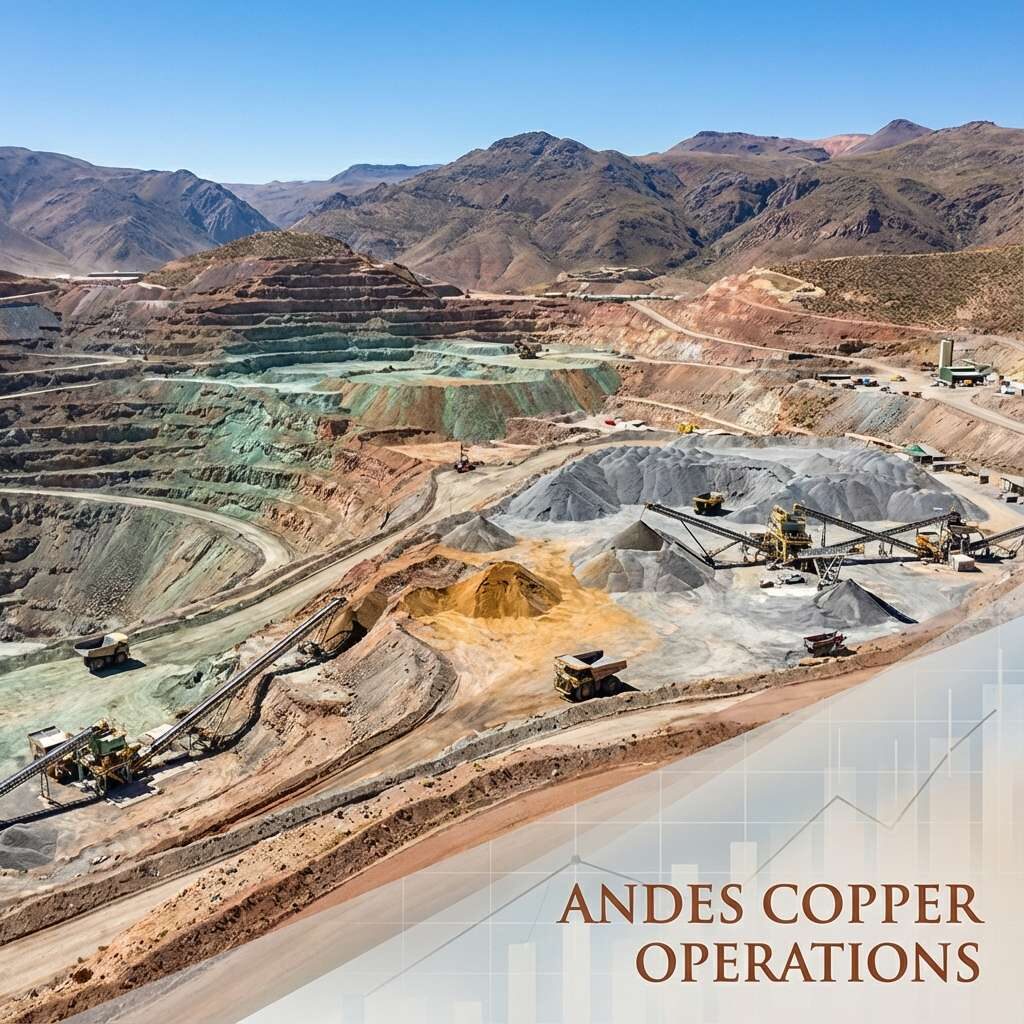
The global economy is undergoing its most profound transformation since the Industrial Revolution. Electrification, decarbonization, digitalization, and AI infrastructure are reshaping demand for a set of critical inputs collectively known as energy-transition materials—including copper, lithium, silver, molybdenum, and rare-earth elements.
The International Energy Agency (IEA) projects that demand for key transition metals could double—or even triple—by 2040, driven by electric vehicles, renewable energy systems, battery storage, and grid expansion. As the world races toward net-zero targets, resource security has become a geopolitical priority, elevating the strategic importance of resource-rich countries.
In this new environment, Peru and Chile stand at the center of the global energy-transition supply chain. Their natural resource endowments, combined with improving macro fundamentals and rising geopolitical relevance, position them uniquely to benefit from capital flows into transition metals.
For global investors seeking exposure to the minerals powering the 21st-century economy, Peru and Chile ETFs offer both strategic value and cyclical upside.
The Rise of Energy-Transition Materials
Energy-transition materials are the building blocks of electrification:
- Copper: Essential for EVs, charging networks, renewable energy, data centers, and global grid upgrades.
- Lithium: The backbone of battery energy storage and electric vehicle chemistry.
- Silver: Crucial for solar photovoltaic cells and high-efficiency electronics.
- Molybdenum & Other Alloying Metals: Used in wind turbines, high-strength steel, transmission lines, and EV components.
Why the supercycle is structural, not cyclical
Unlike prior commodity booms driven by industrialization (China 2000s), today’s demand is:
- policy-driven (governments committing trillions to green investment)
- technology-driven (AI, renewable energy, EV adoption)
- infrastructure-driven (power grids, transmission, storage)
This combination creates predictable, long-duration demand, supporting multi-decade investment cases.
Chile and Peru: Global Leaders in Critical Minerals
Chile: A Copper and Lithium Powerhouse
Chile is the world’s largest copper producer and one of the top producers of lithium, thanks to its vast salt flats (salares) and stable mining infrastructure.
- Large, high-quality copper deposits (Escondida, Collahuasi, Los Pelambres)
- Strong lithium production from SQM and Albemarle partnerships
- Established regulatory framework and sophisticated mining ecosystem
- Strategic importance to U.S., EU, and Asian supply-chain diversification
Chile benefits directly from rising EV battery demand, global grid expansion, renewable energy installations, and bottlenecks in copper supply from African and Asian producers.
A Chile ETF, such as ECH (iShares MSCI Chile), provides exposure to mining giants, utilities, and financials leveraged to commodity cycles and investment flows.
Peru: A Rising Force in Copper and Silver
Peru is the world’s second-largest copper producer and a significant producer of silver, zinc, and molybdenum—all critical to the energy transition.
- Major copper mines (Antamina, Cerro Verde, Las Bambas)
- Rising investment in mining infrastructure
- Strong silver output supporting solar manufacturing
While Peru’s political volatility has occasionally weighed on sentiment, its mining sector remains resilient. Global producers continue to pour capital into Peru because of its rich ore grades and competitive cost base.
A Peru ETF, such as EPU (iShares MSCI Peru), gives investors direct leverage to the metals sector through miner-heavy equity exposure.
Why Peru and Chile ETFs Could Outperform
Direct Exposure to the Metals of the Future
Both countries dominate the supply of metals essential for:
- electric vehicle production
- renewable energy systems
- AI and data center infrastructure
- global grid modernization
Copper deficits alone are expected to widen sharply by the 2030s, supporting elevated price levels and boosting mining profitability.
Beneficiaries of Supply-Chain Realignment
As the U.S., EU, Japan, and India pursue “friend-shoring” and resource diversification, Peru and Chile gain strategic relevance.
Western governments increasingly prefer sourcing from countries with stable institutions, rule-of-law mining frameworks, proximity to shipping lanes, and fewer geopolitical complications. Chile and Peru are natural beneficiaries of this shift.
Attractive Valuations and Cyclical Upside
Peru and Chile equity markets often trade at discounts to global peers, offering:
- high dividend yields
- low forward price-to-earnings ratios
- strong cash flows during commodity cycles
In a world hungry for yield and value, Latin America’s resource exporters offer compelling opportunities.
Currency Leverage for Global Investors
Historically, the Chilean peso (CLP) and Peruvian sol (PEN) appreciate during commodity upcycles. This provides additional return potential via currency tailwinds, particularly when commodity bull markets are driven by structural factors.
Capital Expenditure and Investment Supercycle
Mining investment in both countries is set to accelerate as companies race to expand copper production, secure lithium supply, and develop new energy-transition assets.
Rising capital expenditure usually translates into higher employment, increased tax revenues, stronger corporate earnings, and ETF upward momentum.
Risks to Monitor
- Political and regulatory changes in Latin America
- Environmental and community tensions around new projects
- Global slowdown risks that may affect short-term metal demand
- China demand fluctuations, though the U.S. and India are becoming more dominant demand drivers
However, structural demand for energy-transition materials is likely to outlast cyclical challenges, supporting long-term performance.
Conclusion: Latin America at the Heart of the Energy Transition
The world is entering a metals-intensive phase of economic development. Electrification, EV adoption, AI expansion, and renewable energy capacity growth are reshaping demand patterns across global commodity markets.
Chile and Peru—home to some of the world’s most important deposits of copper, lithium, silver, and molybdenum—stand to benefit disproportionately. Their ETFs offer global investors:
- strategic exposure to critical minerals
- participation in a long-duration commodity supercycle
- attractive valuations
- potential currency tailwinds
- improved geopolitical relevance
In a world where energy-transition materials are becoming the new oil, Peru and Chile ETFs offer a compelling, forward-looking opportunity for global investors. Chile country ETF ECH closed at USD 38.34 and Peru ETF EPU at USD 67.48 on December 10th 2025.

Rainer Michael Preiss is a German national and an investment advisor based in Singapore. He has over 25 years of experience in global private banking and multi-family office business across Europe, Middle East, Africa and Asia. Michael was previously the Chief Equity Strategist at Standard Chartered Bank (SCB) where he was one of seven voting members on the Global Investment Council which decided on SCB’s global investment policy. He is also a prolific and renowned contributor to the financial media world where he is a columnist for Forbes and is frequently featured on Bloomberg, CNA and CNBC.
Connect on LinkedIn →
